High-pressure Gas Leak Test Systems for Industrial Components
News Details
Manufacturers require reliable equipment to assess the gas tightness of valves, piping, cylinders, and wellhead assemblies. The appropriate system must align with the test gas, component volume, required pressure, and acceptance criteria.
We develop high-pressure gas leak test systems utilizing Haskel air-driven gas boosters as the pressure source. Our systems integrate computer and PLC control with automatic pressurization, pressure holding, controlled release, and recorded test data.
Explore our system specifications, review automatic control functions, or prepare an equipment specification for your project.
Integrated Equipment for Gas Tightness Testing
Our system design consolidates gas boosting, pressure control, measurement, and test monitoring.
The pressure-generating equipment and control section can be installed separately. This configuration facilitates remote operation, allowing personnel to monitor the test from a designated control position.
During testing, the computer generates pressure-time curves and saves the collected data. Video monitoring provides an additional perspective of the test area, while recorded images can be compressed and archived.
The final layout should reflect the component size, test volume, gas type, and site requirements. These details guide the selection of connections, fixtures, protective arrangements, and control locations.
Haskel Air-Driven Gas Booster Technology
Haskel gas boosters increase the pressure of an incoming gas supply for testing and other industrial applications.
The booster configuration must be suitable for both the inlet conditions and the required outlet performance. Therefore, selection should take into account the minimum supply pressure, target test pressure, component volume, and required filling time.
A high maximum pressure alone does not determine the system's cycle time. Gas delivery varies with operating conditions, so buyers should request performance data for the intended application.
The selected booster, valves, seals, tubing, and instruments must also be compatible with the test gas.
High-Pressure Gas Test System Specifications
| Parameter | Specification |
| Pressure source | Haskel air-driven gas booster |
| Maximum test pressure | Determined by the approved system configuration |
| Test gases | Nitrogen, air, helium, and other approved compatible gases |
| Oxygen testing | Requires a dedicated oxygen-compatible configuration |
| Pressure measurement accuracy | ±0.5% FS |
| Higher measurement accuracy | Available for configuration evaluation |
| Drive air pressure | 0.5–1.0 MPa |
| Control system | Computer and PLC data acquisition |
| Test functions | Automatic pressurization, holding, and pressure release |
| Records | Pressure-time curves, stored data, video records, and printed reports |
FS stands for full scale. Before ordering, confirm the selected instrument range and the resulting absolute pressure tolerance.
Pressure measurement accuracy is also distinct from leak detection sensitivity. The required leak limit and measurement method must be specified separately.
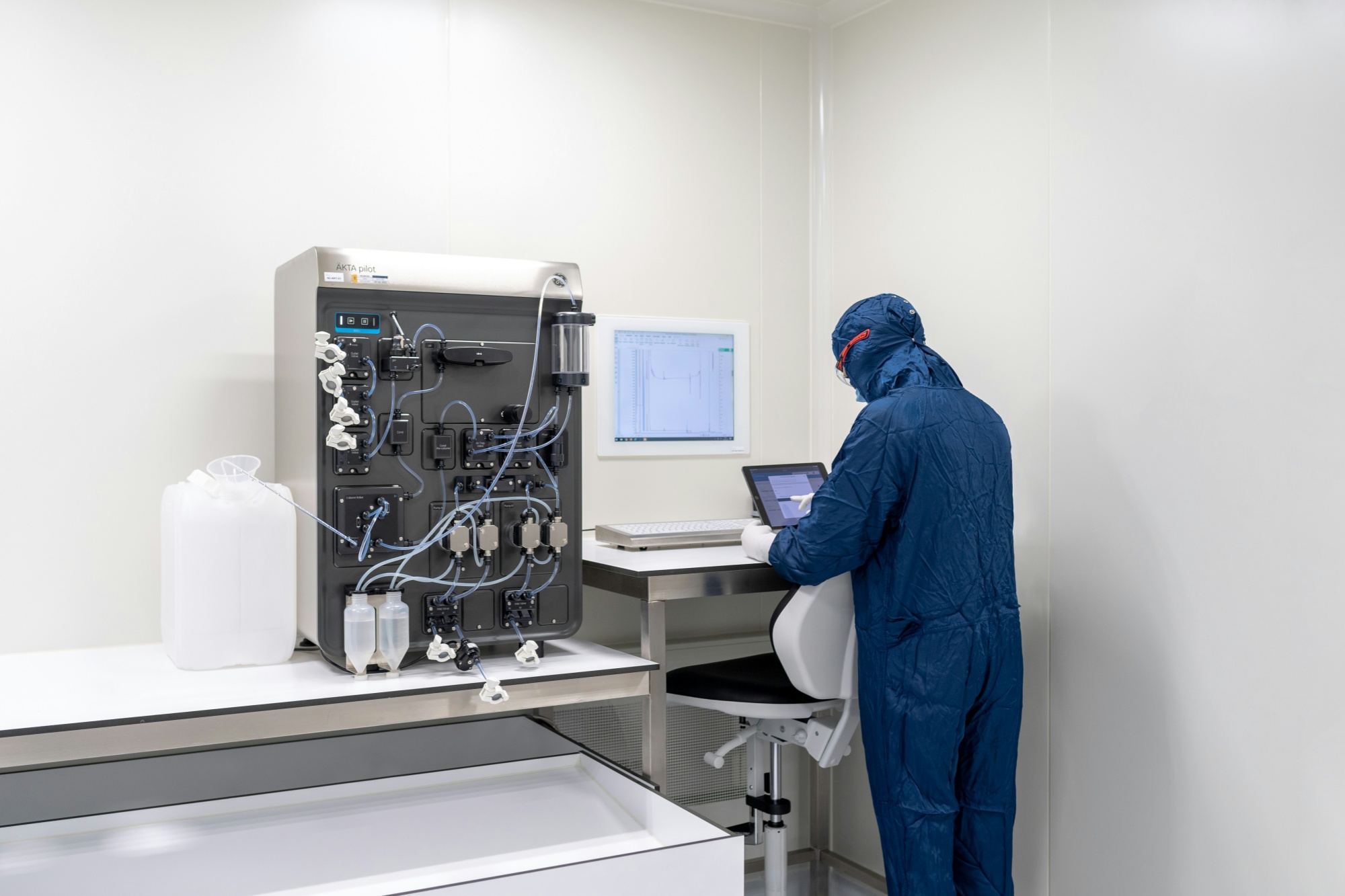
Computer and PLC-Controlled Testing
Computer and PLC control manage the agreed test sequence and collect pressure data.
Automatic operation supports pressurization, pressure holding, and unloading. This helps operators adhere to a defined sequence during repeated tests.
However, a practical test program requires more than just a target pressure. Buyers should also define pressure rise requirements, stabilization conditions, holding duration, and test completion criteria.
For equipment acceptance, agree on how these functions will be demonstrated. Where multiple product types share one system, identify the operational requirements for each group.
Remote monitoring and video observation support the workflow, while the complete installation requires protective measures appropriate for its pressure and gas volume.
Test Gas Selection and Oxygen Compatibility
Nitrogen, air, and helium serve different testing needs. Select the gas based on the component, approved procedure, and required detection method.
For helium testing, define whether the system supplies pressurized helium or forms part of a complete leak detection setup. A gas booster itself does not determine the sensitivity of a helium leak detector.
Oxygen requires a dedicated assessment of materials, seals, cleaning, and operating limits. Specify oxygen service at the inquiry stage so that the proposed configuration can be evaluated accordingly.
Additionally, provide gas purity and supply pressure requirements. These details influence equipment selection and the proposed gas handling arrangement.
Applications for Manufacturers and Inspection Teams
Our gas tightness testing systems address several industrial product categories.
| Product category | Key specification points |
| Blowout preventers | Test volume, connection setup, gas, and approved procedure |
| Oil and gas production trees | Assembly configuration and test circuit requirements |
| Wellhead equipment | Test pressure, fixtures, and inspection criteria |
| Choke manifolds | Valve arrangement, isolation points, and connections |
| Industrial valves | Required sealing test and acceptance limits |
| Pressure piping | Internal volume, connection layout, and test method |
| Fire service cylinders | Applicable inspection procedure and dedicated fixtures |
Cylinder residual deformation measurement requires its own measurement equipment and procedure. Confirm this requirement separately if it is part of the inspection program.
Pressure Curves and Traceable Test Records
Stored records enable quality teams to correlate a test result with the correct component and operating conditions.
The system provides pressure-time curves, automatic data storage, report printing, and archived monitoring records.
Before ordering, define the report fields required by your organization. These may include component identification, test gas, pressure history, holding time, date, operator, and inspection result.
Also, agree on data retention, video storage, and required export formats. This helps align the equipment with the buyer's quality documentation process.
How to Specify a Gas Leak Test System
Include the following information with your inquiry:
-
Component type, dimensions, internal volume, and connections.
-
Test gas, purity, and minimum supply pressure.
-
Required test pressure and filling time.
-
Pressure rise, stabilization, holding, and release requirements.
-
Leak detection method and acceptance limit.
-
Measurement accuracy and calibration requirements.
-
Remote control, video monitoring, and reporting needs.
-
Installation layout, available utilities, and site requirements.
-
Inspection documents, workload, and delivery targets.
Provide the approved test procedure and component drawings where available. These documents help define a suitable system configuration.
Request a Gas Leak Testing System Quotation
Send your component details, test gas, required pressure, and inspection criteria to discuss a suitable system.
The quotation should specify the approved pressure rating, booster configuration, instruments, controls, fixtures, and reporting functions included. Use the gas leak test system checklist to prepare a comprehensive inquiry.


