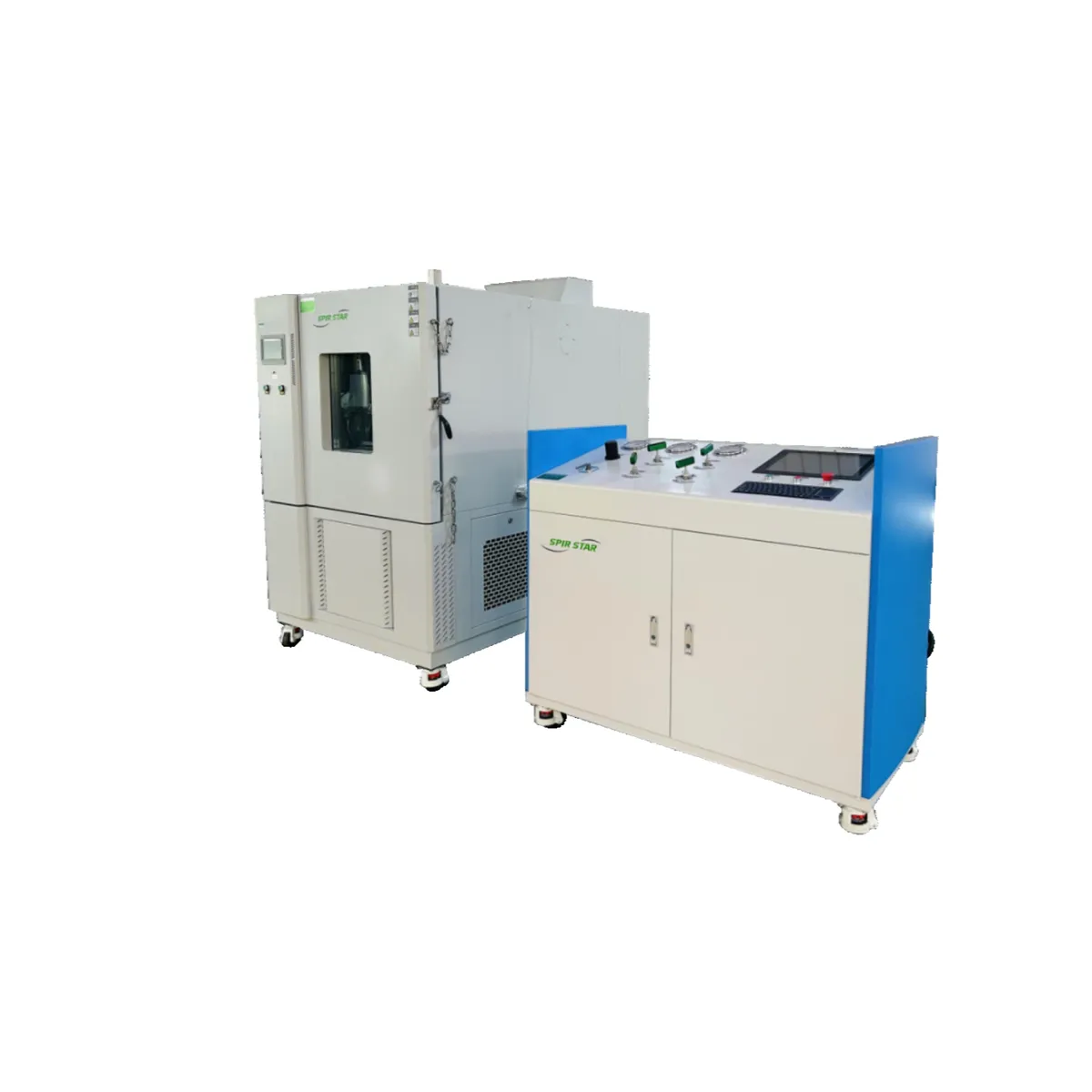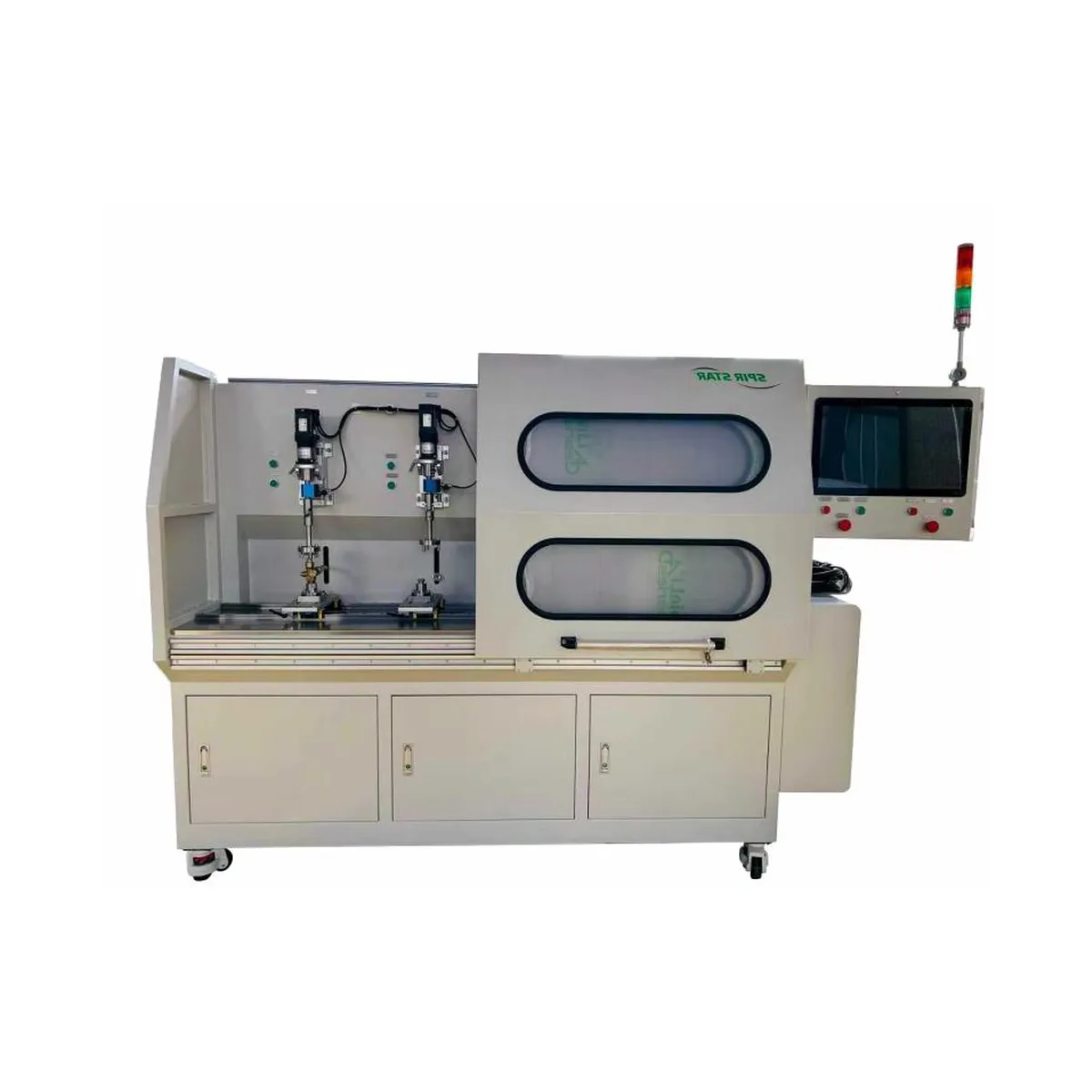
Gas Cylinder Valve Endurance Test System
Product Information
Test Medium:
Hydrogen or nitrogen
Test medium inlet pressure:
≤35 MPa
Pressure regulator adjustment range:
50-6,000 psi
safety pressure setting:
35 MPa
electrical configuration:
380 V / 9.0 kW plus 220 V


Assess the repeated-action performance of cylinder valves using a gas cylinder valve endurance test stand. This system uses hydrogen or nitrogen as the test medium and combines five room-temperature test stations with one station inside a high-low temperature chamber.
It is intended for valve manufacturers and test laboratories, where it is used to evaluate mechanical performance, structural reliability, and durability. Operators can run repeated cycles automatically or use manual control for tasks defined in the test procedure.
Test Valve Endurance at Room and Controlled Temperatures
Use the five room-temperature stations for tests under ambient conditions. The separate chamber station allows testing in a defined hot or cold environment. This design gives engineering teams both configurations within one piece of equipment.
When preparing a test, identify the valve type, cycle count, actuation method, and acceptance criteria. For chamber tests, specify the required temperature range and holding time. Confirm which stations can run together in your proposed test program.
Typical users include valve manufacturers and laboratories serving the process and chemical industries, medical and pharmaceutical equipment, fire protection, emergency response, and transportation.
Technical Specifications
| Parameter | Listed value |
| Test medium | Hydrogen or nitrogen |
| Inlet pressure of test medium | ≤35 MPa |
| Pressure regulator adjustment range | 50–6,000 psi |
| Safety pressure setting | 35 MPa |
| Instrument air range | 0–0.8 MPa |
| Test stations | Five room-temperature stations and one high-low temperature chamber station |
| Control modes | Automatic and manual |
| Pressure gauge accuracy class | 1.6 |
| Pressure sensor accuracy | 0.25% of full scale |
| Electrical configuration | 380 V / 9.0 kW plus 220 V |
The regulator adjustment range, inlet pressure limit, and safety pressure setting are different parts of the system specification. Confirm the permitted test pressure for each station and the selected medium in the approved test plan.
Automatic Cycling, Manual Control, and Monitoring
The operator interface displays the test flow and station status. Automatic mode runs repeated cycles, while manual mode supports individual operations according to the agreed procedure.
The specified pressure-control package uses SPIR STAR tubing and valves and IHT high-pressure pumps. The equipment specification lists protection against overpressure, excessive temperature, leakage, and overload, along with explosion-protection measures. Confirm the scope of protection and site connections for the selected gas and installation.
Define the Test Method Before Ordering
Identify the standard, edition, test clauses, and acceptance criteria for each valve type. For projects referencing GB/T 15382-2021 for general cylinder valve requirements or GB 7512-2023 for LPG cylinder valves, include the clauses that the equipment must support.
Also specify the fixture drawings, valve actuation method, measurements to be recorded, and any required calibration documents. These details give the supplier a basis for quoting fixtures, controls, and acceptance tests as part of the same package.
Request a Cylinder Valve Test System Quotation
Send your valve drawings, test medium, pressure profile, required cycle count, and chamber temperature conditions. Include the station layout you need, available power and instrument air, and any reporting requirements. For procurement, add the delivery destination and target date.