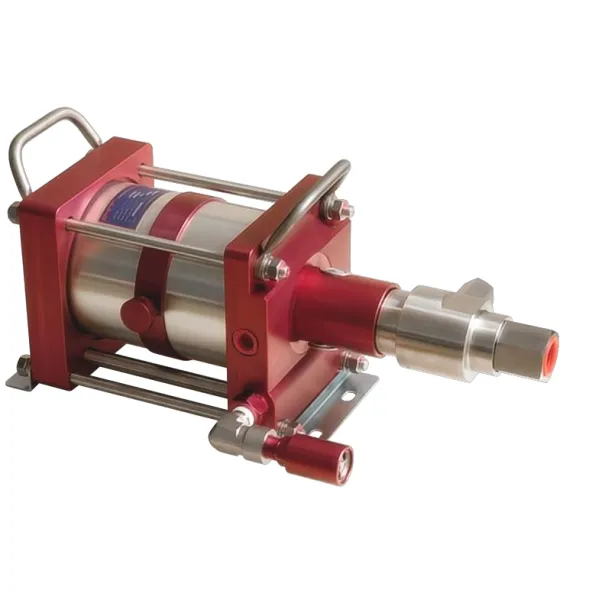
LHF-151 Air Driven Hydraulic Pump for High Pressure Applications
Product Information
Model:
LHF-151
Actual area ratio:
173
Maximum supply air pressure:
150 psi
Maximum rated output pressure:
25,000 psi / 1,724 bar
displacement per cycle:
0.27 cu. in. / 4.4 mL


Our LHF-151 pneumatic liquid booster pump is an air-driven option for industrial projects requiring liquid pressurization within a 25,000 psi (1,724 bar) maximum rated output. This model has a published displacement of 4.4 mL per cycle, an actual area ratio of 173, and a maximum air supply pressure of 150 psi. Both continuous and intermittent duty carry the same listed maximum output pressure. For equipment builders, test system integrators, and purchasing teams, the LHF-151 provides specific operating and connection data for evaluating a high-pressure pump assembly. Review the ratings below, then submit your working conditions for model and configuration confirmation. Published LHF-151 Operating Data Product Attribute LHF-151 Specification Series LHF Model LHF-151 Dash number -151 Actual area ratio 173 Maximum air supply pressure 150 psi Maximum rated output pressure — continuous operation 25,000 psi / 1,724 bar Maximum rated output pressure — intermittent operation 25,000 psi / 1,724 bar Displacement per cycle 0.27 cu. in. / 4.4 mL Air-drive connection 1/2" FNPT Liquid inlet connection 1/2" FNPT Liquid outlet connection 1/4" HP These specifications refer only to the LHF-151 configuration. The model designation, actual area ratio, and pressure rating are listed separately to support clear equipment documentation. For other configurations, explore our pneumatic liquid booster pumps. Specify the Pump Within the Complete Circuit A pressure assembly combines the pump with its liquid supply, air supply, pipework, controls, and connected equipment. Therefore, selection should account for how these parts work together. Define the pressure task. State the normal working pressure and the highest pressure required by the process. Also, describe whether the equipment runs continuously or in separate operating cycles. Define the liquid demand. Include the volume to be delivered and the time available. For a test circuit, explain the filling and pressurization sequence. For a machine installation, identify when liquid delivery is needed during operation. Define the supply conditions. Provide the liquid inlet arrangement, available air pressure, and air supply capacity. The pump’s 150 psi maximum air supply rating is an upper limit, rather than a required setting for every application. Potential evaluations include component pressure testing, specialist laboratory equipment, and integrated liquid pressure packages. Final suitability depends on the operating requirements and confirmed fluid compatibility. Connection Details That Matter to Equipment Buyers The LHF-151 uses 1/2-inch FNPT ports for the air drive and liquid inlet, together with a 1/4-inch HP liquid outlet. The HP outlet requires particular attention during the discharge-line review. Confirm the mating connection geometry and fitting specification against the product drawing before selecting connection parts. The nominal size alone does not define the complete interface. Next, check the tubing, valves, gauges, and other liquid-side components for the intended pressure and fluid service. In addition, confirm mounting dimensions and allow access for installation, inspection, and maintenance. Browse our air-driven liquid pumps when comparing component options for your equipment layout. Answers for Engineering and Purchasing Teams Does the 4.4 mL displacement establish the flow rate? It describes liquid volume per cycle. Flow per minute also depends on cycle speed and operating conditions, including outlet pressure, air supply, and inlet conditions. Request performance information for your required duty point. Is the maximum pressure different for intermittent use? For the LHF-151, both continuous and intermittent maximum output ratings are listed as 25,000 psi, or 1,724 bar. Which liquids can be used? Compatibility must be checked for the specific liquid and temperature. Provide the fluid name, concentration where relevant, and operating temperature so wetted materials and seals can be reviewed. What should be agreed before placing an order? Confirm the configuration, operating requirements, connection details, dimensions, and supply scope. Also, identify any required accessories, drawings, manuals, or other documentation during quotation. Discuss Your LHF-151 Supply Requirement Send our team your target pressure, required flow, working liquid, operating temperature, available air supply, and duty cycle. Please include the quantity, delivery destination, and required delivery date as well. For OEM projects, a circuit diagram or equipment drawing can help clarify the installation. For replacement purchases, provide the existing pump reference and connection requirements. Request an LHF-151 booster pump quotation to review the technical specification, pricing, supply scope, and lead time for your project.
Recommended products
Recommended products


