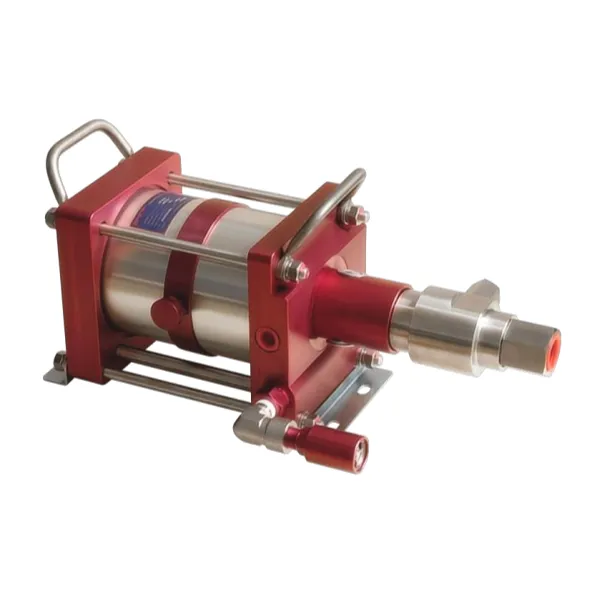
LSF-B10 Pneumatic-driven Liquid Intensifier for OEMs
Product Information
Model:
LSF-B10
Actual area ratio:
11.5
Maximum supply air pressure:
150 psi
Maximum rated output pressure:
1,600 psi / 110 bar
displacement per cycle:
66.4 cc


The LSF-B10 pneumatic liquid booster pump provides air-driven liquid pressurization for industrial equipment projects. Its published specifications combine a 1,600 psi (110 bar) maximum rated output pressure with 66.4 mL displacement per cycle.
For machine builders and procurement teams, this model offers defined pressure, displacement, and connection data for the equipment specification. A 1-inch FNPT inlet connects the liquid supply, while a 1/2-inch FNPT outlet connects the discharge circuit.
Whether your project involves a new machine, a test assembly, or a replacement component, start with the LSF-B10’s rated data and match it to the actual operating duty.
Pressure Capacity and Liquid Delivery in One Specification
The LSF-B10 has the same listed maximum output pressure for continuous and intermittent operation: 1,600 psi, or 110 bar. As a result, both duty types share one published pressure limit.
Its 66.4 mL displacement per cycle provides a separate measure of liquid delivery. This matters when the equipment must fill a defined volume or supply liquid during repeated machine cycles.
However, displacement does not establish flow per minute. Actual flow depends on cycle speed, outlet pressure, air supply, and inlet conditions. Therefore, a complete inquiry should state the required pressure and flow together.
The maximum air supply pressure is 150 psi. Confirm the available air pressure and capacity when reviewing the pump for your installation.
LSF-B10 Technical Specifications
| Technical Item | LSF-B10 Data |
| Product model | LSF-B10 |
| Dash number | -B10 |
| Actual area ratio | 11.5 |
| Maximum air supply pressure | 150 psi |
| Maximum rated output pressure — continuous | 1,600 psi / 110 bar |
| Maximum rated output pressure — intermittent | 1,600 psi / 110 bar |
| Displacement per cycle | 4.05 cu. in. / 66.4 mL |
| Air-drive connection | 1/2" FNPT |
| Liquid inlet connection | 1" FNPT |
| Liquid outlet connection | 1/2" FNPT |
These specifications apply specifically to the LSF-B10 configuration.
For additional model choices, visit our pneumatic liquid booster pump range.
Review the Pump Against Your Production Task
Different equipment duties call for different selection details. Accordingly, describe what the pump must achieve within the complete process.
For pressure test equipment, provide the circuit volume, target pressure, and required test sequence. Include the time allowed for filling and pressurization so the performance review reflects the intended workflow.
For machine-mounted pressure circuits, identify when liquid delivery is needed and how demand changes during operation. Also, state the expected operating hours and frequency of use.
For replacement projects, provide the existing pump reference and operating conditions. Then compare mounting dimensions, port positions, and performance requirements before confirming the new component.
In all cases, fluid and seal compatibility must suit the working liquid and temperature. These details require confirmation alongside the published pressure data.
Connection Details for Your Assembly Drawing
The LSF-B10 uses three defined interfaces:
-
Air supply: 1/2-inch FNPT.
-
Liquid supply: 1-inch FNPT.
-
Liquid discharge: 1/2-inch FNPT.
List these connections separately in the assembly drawing and bill of materials. This gives purchasing and installation teams a clear reference for mating fittings.
Next, check each liquid-side component against the working pressure and fluid service. Hoses, valves, gauges, and adapters need their own suitable ratings.
Before releasing the equipment layout, confirm the pump’s overall dimensions and mounting details. In addition, allow access for connection work, inspection, and maintenance.
Browse our air-driven liquid pumps when reviewing alternative arrangements.
Establish a Clear Basis for Repeat Orders
For OEM purchasing, an agreed specification helps keep engineering requirements and order details aligned. Use LSF-B10 as the model reference, then record the confirmed materials, seals, connections, and installation dimensions.
Also, define the supply scope. State whether the inquiry covers the pump alone or includes a request for associated components. Identify any required drawings, manuals, or other documentation during the quotation stage.
For scheduled purchases, include expected quantities and delivery dates. This allows the commercial review to address your production plan alongside the technical requirements.
Request an LSF-B10 Supply Proposal
Send us the working liquid, operating temperature, required outlet pressure, target flow, and available air supply. Please also include the duty cycle, order quantity, and delivery destination.
If available, attach a circuit drawing or equipment layout. This helps clarify how the pump will work within your system.
Request an LSF-B10 booster pump quotation to discuss model suitability, supply scope, pricing, and lead time.
Recommended products
Recommended products


